The Hidden Crisis in Tech Worker Households
There’s a persistent myth that highly educated, detail-oriented professionals maintain pristine living environments. The reality? Tech workers—software engineers, developers, IT specialists, and computer programmers—often live in some of the most mold-prone conditions imaginable. This isn’t about intelligence or capability. It’s about priorities, lifestyle patterns, and a fundamental disconnect between digital expertise and physical home maintenance.
Professional Mold Removal in Shreveport, Louisiana: A Critical Resource for Tech Professionals
For tech workers in the Shreveport area, the combination of Louisiana’s humid subtropical climate and the lifestyle factors discussed in this article creates a perfect storm for mold growth. Shreveport’s average humidity levels frequently exceed 70%, and when combined with the poor ventilation habits common among remote tech workers, homes become breeding grounds for mold colonies. Local professionals who understand both the regional climate challenges and the specific building construction common to Shreveport homes provide essential services that go far beyond what any DIY approach can accomplish. These specialists recognize that Shreveport’s older housing stock, combined with the moisture-generating habits of tech workers running multiple computers and servers, requires targeted assessment and remediation strategies.
If you’re a tech professional reading this page, you might be uncomfortable with what follows. But understanding why your demographic is particularly vulnerable to mold problems is the first step toward protecting your health and your investment.
Myth #1: Smart People Have Clean Homes
Let’s dismantle this assumption immediately. Intelligence and domestic maintenance exist on completely separate axes. A software engineer capable of architecting complex distributed systems may genuinely not notice the water stain spreading across their ceiling. This isn’t ignorance—it’s selective attention shaped by professional demands.
Tech workers typically exhibit what psychologists call “environmental blindness” toward their physical surroundings. When your cognitive resources are consumed by debugging code, managing sprints, or solving abstract problems, your brain literally filters out non-critical environmental stimuli. That musty smell? The discoloration in the corner? Your mind categorizes these as low-priority background noise.
The Cognitive Load Factor
Research shows that professionals in cognitively demanding fields experience decision fatigue that extends to home maintenance decisions. After spending eight to twelve hours making hundreds of micro-decisions about code, architecture, or system design, the mental bandwidth required to assess home maintenance needs simply isn’t available.
This explains why tech workers often live in conditions they would never tolerate in their professional environments. The same person who demands clean code and elegant solutions at work may ignore obvious signs of water damage at home.
Myth #2: Working From Home Means Better Home Maintenance
The remote work revolution hasn’t solved the tech worker mold problem—it’s actually exacerbated it. Here’s why this seemingly logical assumption falls apart under scrutiny.
Increased Indoor Humidity
Tech workers at home generate more moisture than typical residents. Multiple computers running continuously produce heat and drive up cooling demands. More time indoors means more breathing, more cooking, more showering—all activities that increase indoor humidity levels. In climates like Shreveport’s, where humidity is already a challenge, this additional moisture creates ideal mold conditions.
Poor Ventilation Habits
Remote tech workers often seal themselves in climate-controlled environments for optimal equipment performance and personal comfort. Windows remain closed. Air circulation becomes stagnant. This creates moisture traps where condensation accumulates and mold colonies establish themselves unnoticed.
The “Always On” Lifestyle
When your bedroom is your office is your living room, normal home maintenance routines disappear. There’s no commute time to notice problems. No weekend distinction to trigger deep cleaning. The boundary dissolution that characterizes remote tech work extends to home care—everything becomes deprioritized in favor of the next sprint, the next deployment, the next urgent Slack message.
Myth #3: Mold Is Just a Cosmetic Issue
Tech workers often approach mold with the same troubleshooting mindset they apply to software bugs: identify the visible problem, apply a surface-level fix, move on. This is dangerously inadequate.
Mold is never just a surface issue. When you see mold growth, you’re observing the reproductive structures of an organism that has already colonized your building materials. The visible mold represents perhaps 10% of the actual problem. The remaining 90% exists inside walls, under flooring, within HVAC systems—places where DIY solutions cannot reach.
Health Implications Tech Workers Ignore
The health effects of mold exposure are particularly insidious for sedentary knowledge workers:
- Cognitive impairment: Mycotoxins from certain mold species affect memory, concentration, and processing speed—the exact cognitive functions tech work demands
- Respiratory issues: Prolonged exposure causes chronic inflammation that worsens with poor posture and shallow breathing common among desk workers
- Immune system stress: Constant low-level mold exposure taxes immune function, increasing susceptibility to other illnesses
- Sleep disruption: Mold exposure affects sleep quality, compounding the sleep deficits many tech workers already experience
Many tech workers attribute these symptoms to work stress, poor ergonomics, or inadequate exercise. They never connect their declining performance to their living environment. According to research from the National Institutes of Health, prolonged mold exposure can lead to serious long-term health complications that extend far beyond simple allergic reactions.
Myth #4: Tech Skills Transfer to Home Maintenance
There’s an assumption that people who can troubleshoot complex technical problems can handle home maintenance. This is fundamentally flawed reasoning.
Software and hardware follow logical, documented rules. Buildings are organic systems influenced by physics, biology, chemistry, and environmental factors that interact unpredictably. A tech worker might successfully replace a toilet flapper or install a smart thermostat, but identifying moisture intrusion patterns or assessing structural mold risk requires completely different expertise.
The DIY Disaster Pattern
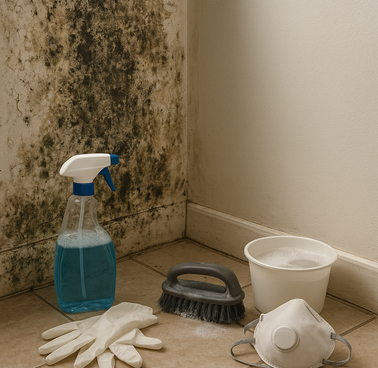
Tech workers often approach mold remediation as a DIY project. They research online, purchase consumer-grade products, and treat visible mold growth. This approach fails for several reasons:
- Consumer products don’t address underlying moisture sources
- Surface treatment leaves subsurface colonies intact
- Improper remediation spreads spores throughout the home
- Without proper containment, DIY efforts contaminate previously clean areas
- Failure to identify all affected areas allows continued growth
The tech worker mentality of “I can figure this out” becomes actively harmful when applied to mold remediation.
Why Professional Mold Remediation Is Non-Negotiable
Professional mold remediation isn’t about paying someone to do work you could theoretically do yourself. It’s about accessing expertise, equipment, and protocols that aren’t available to homeowners.
Proper Assessment Requires Specialized Knowledge
Professional remediators understand building science. They recognize how moisture moves through structures, where condensation accumulates, and which building materials are most vulnerable. They use moisture meters, thermal imaging, and air sampling to identify problems invisible to homeowners. The U.S. Environmental Protection Agency provides comprehensive guidelines for proper mold assessment and remediation that professionals follow to ensure safe and effective treatment.
Containment Prevents Spread
Disturbing mold colonies releases millions of spores. Without proper containment—negative air pressure, physical barriers, air filtration—remediation efforts spread contamination throughout your home. Professional protocols prevent this cross-contamination.
Complete Removal Requires Proper Equipment
Effective mold remediation requires HEPA filtration, antimicrobial treatments, and often removal of contaminated building materials. These aren’t consumer-level tools. Professional remediators have the equipment to completely eliminate mold colonies and prevent recurrence.
The Real Solution: Acknowledging Limitations
Tech workers excel at solving problems within their domain of expertise. The solution to the tech worker mold problem isn’t better DIY techniques—it’s recognizing when professional expertise is required.
Preventive Measures Tech Workers Can Actually Implement
- Schedule automated reminders for HVAC filter changes, gutter cleaning, and home inspections
- Install smart humidity monitors that alert you to problematic moisture levels
- Use dehumidifiers in computer rooms and other equipment-heavy spaces
- Create ventilation routines tied to work breaks—open windows during standup meetings
- Hire regular home maintenance services to handle routine inspections you’ll forget
When to Call Professionals
Don’t wait for visible mold growth. Call professional remediators when you notice:
- Persistent musty odors
- Unexplained health symptoms that improve when you leave home
- Any water intrusion event (leaks, floods, condensation)
- Elevated humidity readings above 60%
- Discoloration on walls, ceilings, or floors
Conclusion: Expertise Recognizes Its Boundaries
The most sophisticated understanding in software engineering includes knowing when to call in specialists from other domains. The same principle applies to home maintenance.
Tech workers don’t neglect their homes because they’re incapable or lazy. They neglect them because their cognitive resources are allocated elsewhere, and they often lack the framework to recognize developing problems. Mold thrives in this attention gap.
Professional mold remediation isn’t an admission of failure—it’s a recognition that building science is as specialized as software engineering. Just as you wouldn’t expect a mold remediator to architect your company’s database infrastructure, don’t expect yourself to properly assess and remediate mold contamination.
The smartest move a tech worker can make regarding mold isn’t learning DIY remediation techniques. It’s building a relationship with professional remediators before problems develop, implementing preventive monitoring systems, and responding immediately when issues arise.
Your home is your largest investment and the foundation of your health. Treat it with the same seriousness you bring to your professional work—which means recognizing when expert intervention is required and acting on that knowledge without delay.