Debugging Your Home: When Mold Becomes a Critical Error
Anyone who’s written code knows the frustration of tracking down a bug that’s been quietly corrupting your program. Mold in your home operates on a similar principle—it starts small, often invisible, and by the time you notice the symptoms, it’s already spread through multiple systems. Here in Stamford, our coastal Connecticut climate creates the perfect conditions for this biological “bug” to thrive, especially in older homes where moisture control wasn’t designed with modern standards in mind.
Professional Mold Removal Services in Stamford, Connecticut: A Systematic Solution
The intersection between systematic problem-solving and mold remediation isn’t just a clever metaphor. Professional mold removal requires the same logical, step-by-step approach that programmers use to debug complex systems. You can’t just patch the visible problem and call it fixed—you need to trace the issue back to its root cause, address every affected component, and implement preventive measures to ensure it doesn’t recurr. For homeowners in Stamford dealing with persistent moisture issues, working with specialists like https://moldremovalstamfordct.com/ means applying this systematic methodology to protect your indoor air quality.
Understanding the Algorithm: How Mold Spreads Through Your Home
Mold operates on a surprisingly simple algorithm: moisture + organic material + time = growth. Like a recursive function, once the conditions are met, the process repeats exponentially. A single mold colony can release millions of spores into your air, each one seeking its own moisture source to begin the cycle again.
In Stamford homes, the most common execution points for this algorithm include basements affected by groundwater seepage, bathrooms with inadequate ventilation, attics with roof leaks, and the spaces behind walls where condensation accumulates. Our proximity to Long Island Sound means humidity levels frequently exceed the 60% threshold where mold growth accelerates dramatically.
The Input Variables: Stamford’s Climate Factors
Connecticut’s weather patterns create multiple vulnerability windows throughout the year. Spring brings heavy rainfall that tests foundation waterproofing and drainage systems. Summer humidity turns poorly ventilated spaces into mold incubators. Fall leaves clog gutters, causing water to infiltrate where it shouldn’t. Winter’s freeze-thaw cycles create ice dams and condensation issues that won’t manifest as visible mold until months later.
These seasonal variables mean that mold prevention isn’t a one-time fix—it’s an ongoing process that requires monitoring and adjustment, much like maintaining a complex codebase.
The Systematic Inspection Protocol
Professional mold assessment follows a logical sequence that leaves no stone unturned. This isn’t about glancing at visible surfaces and making assumptions—it’s about comprehensive data gathering.
Visual Inspection and Pattern Recognition
The first phase involves identifying visible mold growth and, more importantly, recognizing the patterns that indicate hidden problems. Discoloration on ceilings directly below bathrooms suggests plumbing leaks. Musty odors in finished basements point to moisture infiltration through foundation walls. Warped baseboards indicate water wicking up from beneath flooring.
Experienced professionals develop pattern recognition skills similar to seasoned developers spotting code smells. That slight water stain might seem insignificant, but it’s a symptom of a larger systemic issue.
Moisture Mapping: Quantifying the Problem
Modern mold inspection relies heavily on moisture meters and thermal imaging cameras—tools that provide objective data rather than subjective impressions. These instruments detect elevated moisture levels inside walls, under flooring, and in other concealed spaces where visual inspection alone would miss the problem.
In Stamford’s historic neighborhoods, homes built in the early-to-mid 20th century often have additions and renovations that created new moisture pathways. Thermal imaging reveals these architectural vulnerabilities by showing temperature differentials that indicate air leaks, missing insulation, or active water infiltration.
Air Quality Testing: Measuring Spore Counts
Air sampling provides quantifiable data about what you’re actually breathing. Laboratory analysis identifies specific mold species and their concentrations, which informs both the remediation approach and health risk assessment. Some molds are merely allergenic nuisances, while others produce mycotoxins that pose serious health risks.
This testing phase is analogous to profiling code performance—you need metrics to understand the severity of the problem and to verify that your remediation efforts actually worked.
The Remediation Algorithm: Step-by-Step Execution
Once you’ve identified the scope of the problem, remediation follows a strict protocol designed to eliminate existing mold while preventing cross-contamination to clean areas.
Containment: Isolating the Affected Modules
Professional remediation begins with containment—creating physical barriers using plastic sheeting and establishing negative air pressure in work zones. This prevents mold spores from spreading to unaffected areas during the removal process, similar to how you’d isolate problematic code in a sandbox environment before making changes.
For Stamford homes with central HVAC systems, this step is particularly critical. Mold spores can travel through ductwork, turning a localized problem into a whole-house contamination event.
HEPA Filtration: Cleaning the Environment
High-efficiency particulate air (HEPA) filtration systems run continuously during remediation, capturing airborne spores before they can settle and establish new colonies. These industrial air scrubbers process thousands of cubic feet per minute, creating multiple air changes per hour in the work zone.
Think of HEPA filtration as your error handling and logging system—it captures problems before they can cause downstream failures.
Material Removal: Eliminating Corrupted Components
Porous materials that have been heavily colonized by mold cannot be adequately cleaned—they must be removed and replaced. This includes drywall, insulation, carpeting, and ceiling tiles. Non-porous surfaces like metal, glass, and hard plastics can typically be cleaned and salvaged.
This is the most difficult decision point in remediation, analogous to deciding whether to refactor problematic code or rewrite it entirely. Experienced professionals know when aggressive removal is necessary versus when thorough cleaning will suffice.
Antimicrobial Treatment: Preventing Recompilation
After physical removal, affected areas receive antimicrobial treatments that eliminate remaining spores and create an inhospitable environment for regrowth. These treatments penetrate porous surfaces that couldn’t be removed, providing an additional layer of protection.
Verification Testing: Confirming the Fix
Post-remediation air quality testing confirms that spore counts have returned to normal levels. This clearance testing is your quality assurance phase—objective proof that the remediation was successful and the space is safe for reoccupation.
Root Cause Analysis: Fixing the Underlying Issue
Here’s where many homeowners make a critical mistake: they address the mold but ignore the moisture source. This is like fixing a bug without understanding what caused it—you’re virtually guaranteed to see the problem return.
Common Moisture Sources in Stamford Homes
- Foundation issues: Cracks, poor exterior grading, and inadequate drainage systems allow groundwater infiltration
- Plumbing leaks: Slow drips inside walls can go unnoticed for months while creating perfect mold conditions
- Roof problems: Missing shingles, damaged flashing, and clogged gutters lead to water intrusion
- Ventilation deficiencies: Bathrooms and kitchens without proper exhaust systems trap moisture indoors
- HVAC condensation: Improperly installed or maintained systems can generate significant moisture
- High indoor humidity: Lack of dehumidification in summer months creates chronic elevated moisture levels
Each of these issues requires specific corrective measures. A comprehensive approach might involve foundation waterproofing, plumbing repairs, roof restoration, ventilation improvements, and installation of whole-house dehumidification systems.
Preventive Maintenance: Writing Clean Code from the Start
The most effective mold strategy is prevention. By controlling moisture proactively, you eliminate the conditions mold needs to establish itself.
Monitoring and Early Detection
Smart home technology now includes moisture sensors that alert you to problems before they become visible. These devices can be placed in vulnerable areas like basements, crawl spaces, and beneath sinks, providing early warning of leaks or elevated humidity.
Regular visual inspections should be part of your home maintenance routine. Check beneath sinks, around windows, in attics, and in basements at least quarterly. Look for condensation, water stains, musty odors, and any signs of moisture accumulation.
Environmental Controls
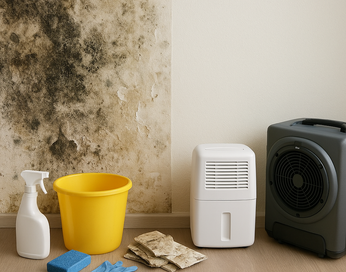
Maintaining indoor humidity between 30-50% prevents mold growth while remaining comfortable for occupants. Dehumidifiers, proper ventilation, and strategic use of exhaust fans all contribute to moisture control.
In Stamford’s humid summers, this often requires mechanical dehumidification. Basement dehumidifiers should be sized appropriately for the space and equipped with automatic drainage rather than collection buckets that require manual emptying.
Structural Improvements
Long-term moisture control may require capital improvements: extending downspouts away from foundations, installing French drains, improving attic ventilation, upgrading bathroom exhaust fans, or encapsulating crawl spaces. These investments protect both your home’s structure and your family’s health. Organizations like the National Institute of Building Sciences provide valuable resources on building best practices that can help homeowners understand proper moisture management and construction standards.
The Human Element: Health Impacts of Poor Indoor Air Quality
Mold exposure affects different people differently, but the potential health impacts shouldn’t be dismissed. Allergic reactions, asthma exacerbation, respiratory infections, and chronic inflammatory responses are all documented consequences of mold exposure.

Children, elderly individuals, and those with compromised immune systems face elevated risks. If household members experience unexplained respiratory symptoms, chronic headaches, fatigue, or skin irritation that improves when away from home, indoor air quality should be investigated.
Conclusion: Compiling Your Mold-Free Future
Approaching mold removal with a programmer’s mindset—systematic, logical, and thorough—produces better outcomes than reactive, superficial fixes. Understanding the conditions that allow mold to thrive, implementing comprehensive remediation when necessary, addressing root causes, and maintaining preventive measures creates a sustainable solution.
For Stamford homeowners, our local climate demands vigilance. The same coastal environment that makes our community attractive also creates persistent moisture challenges. By treating mold prevention as an ongoing process rather than a one-time project, you protect your investment and your family’s wellbeing.
The systematic approach isn’t just about removing what you can see—it’s about understanding the entire system, identifying vulnerabilities, and implementing solutions that address problems at their source. Whether you’re debugging code or eliminating mold, the methodology remains the same: gather data, analyze patterns, implement targeted solutions, verify results, and maintain the system going forward.
Your home’s indoor air quality deserves the same attention to detail you’d give any complex problem worth solving.